
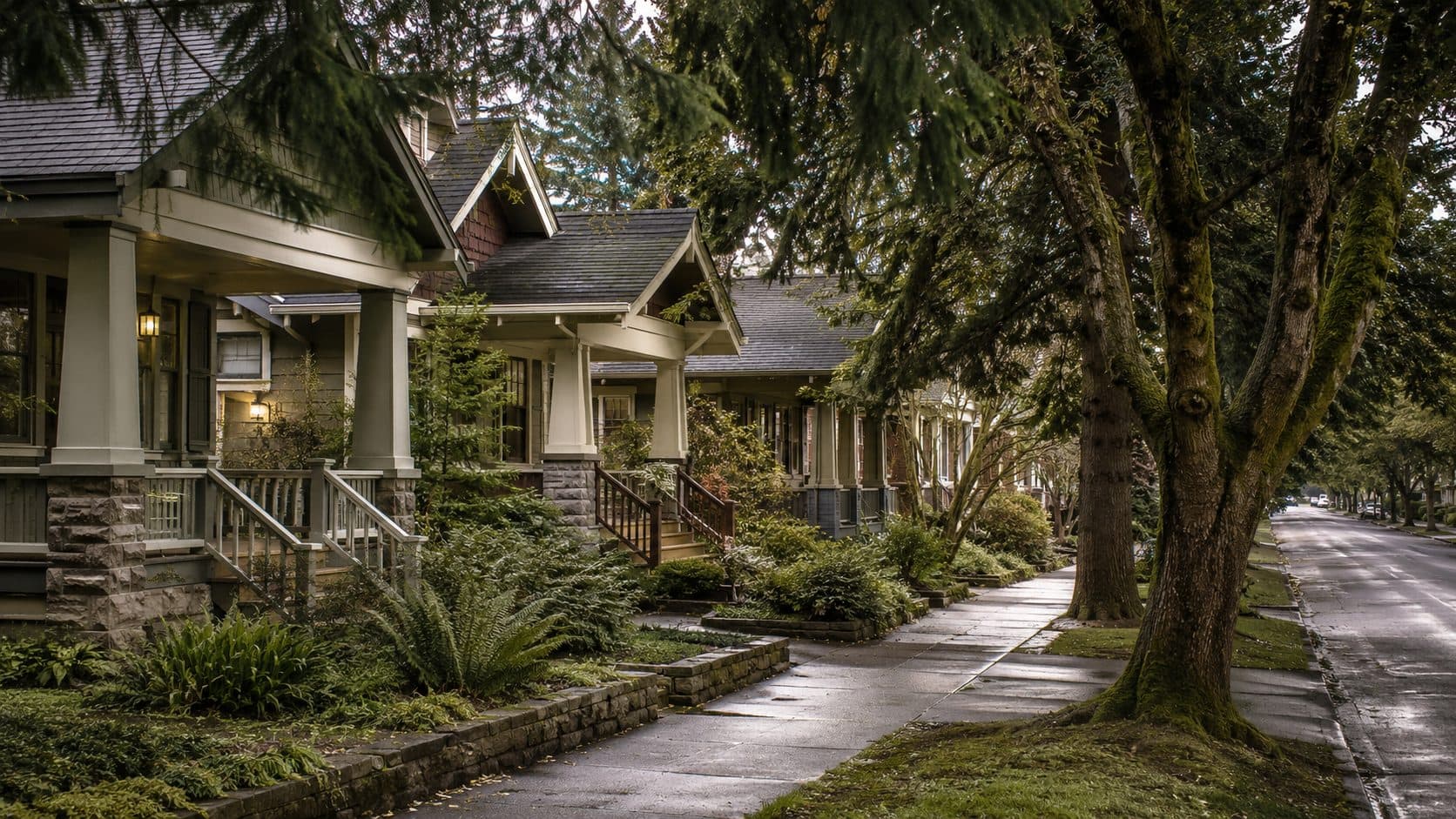
Southeast covers a lot of ground, and its houses vary widely. A call could come from a Sellwood-Moreland foursquare, a Richmond bungalow off Division, an apartment above a Belmont storefront, a house on Mount Tabor, or a Woodstock bungalow near Johnson Creek. Those houses were built in different years, finished in different ways, and have aged differently, so the fix that works in one is often the wrong fix for the next.
What most of them share is the kind of wall behind the paint. The core of Southeast, the old streetcar neighborhoods around Hawthorne, Belmont, Division, and Clinton, was built mostly between the 1890s and the 1930s, as the streetcar lines went in. Those houses have lath-and-plaster walls and hand-troweled ceilings from before spray equipment existed. Farther out, toward Woodstock, Lents, and the edges of Southeast, you find later homes with drywall and sprayed texture. Anyone working in Southeast has to handle both. Plaster and drywall are repaired differently, and a plaster wall patched the way you would patch drywall never sits quite right.