
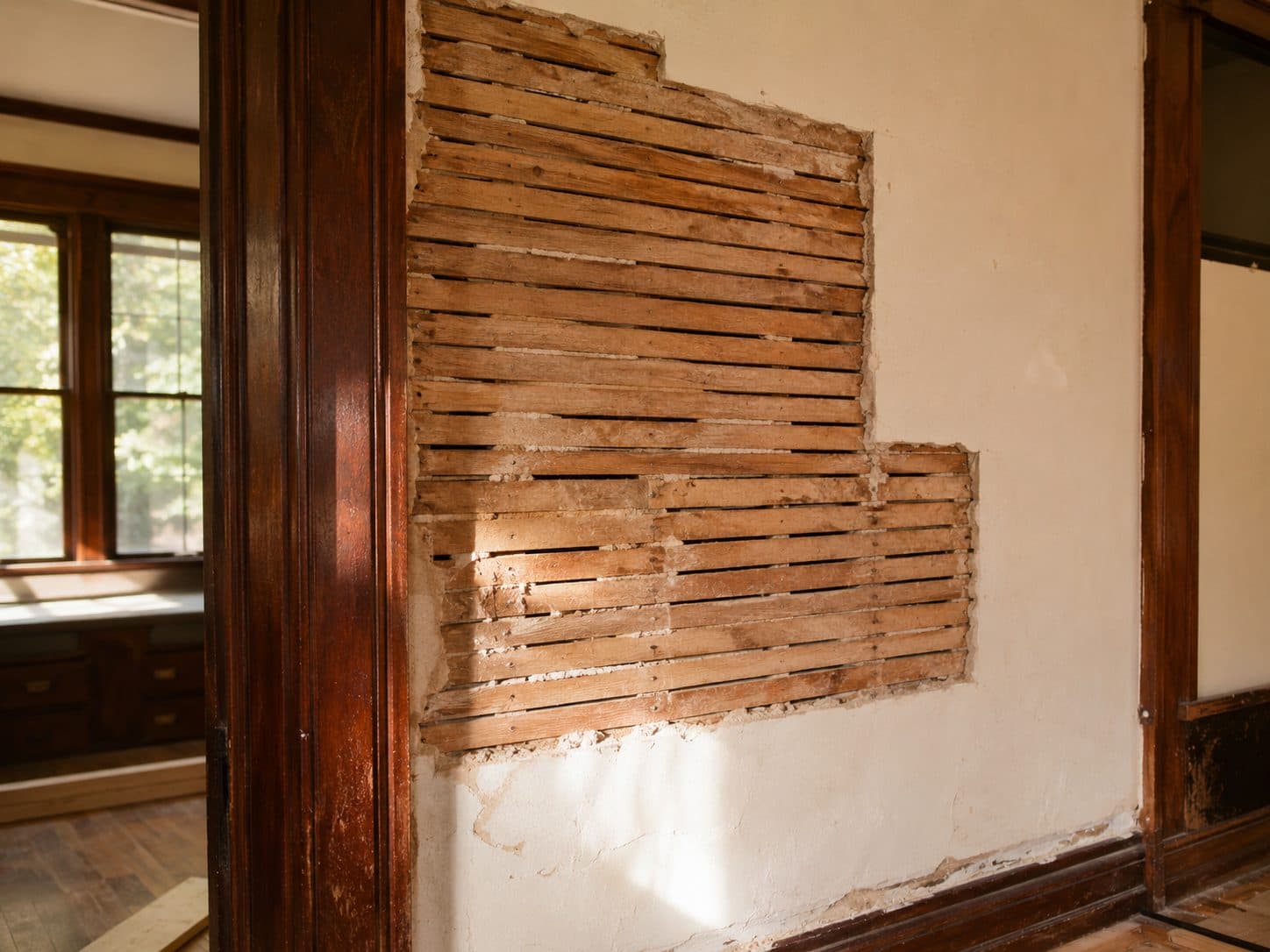
Most houses in the Alphabet District, Nob Hill, and Slabtown were built before drywall came into use. The walls are lath and plaster: thin wood strips nailed across the studs, three coats of plaster troweled over them, and a hard finish coat on top. If you are looking for drywall repair in Portland's Northwest neighborhoods, there is a good chance your wall is actually plaster. These walls take on moisture during Portland's damp months and dry out again once the heat comes on. That yearly swing causes most of the hairline cracks above doors and windows. Up in Willamette Heights and along the Forest Park edge, many houses are even older, and they sit on slopes that shift a little from season to season.
Plaster fails in its own ways. It cracks along stress lines, and it pulls away from the lath when the "keys" break off. Keys are the bits of plaster that squeezed between the wood strips and hold the wall on. It also crumbles at the edges of old patches that someone rushed. Repairing plaster takes different skills than hanging drywall, and fewer crews still do it. Where the wall is worth keeping, we reattach the plaster to the lath, skim-coat it smooth, and match the finish so the repair looks original. Where a section is too far gone, we cut it out and blend in new drywall so you cannot tell where the old wall ends and the new board begins.